
Newsletter: Let’s Work Together in the New Year 🤝 ; The Unlikely Partner Right Under Your Feet🦶; The Hottest Job Title Right Now: Storyteller 📖
Happy New Year's Eve! 🥳🎉🍾🥂
Before we jump into new trends, tactics, and wicked smahht partnership ideas for 2026, I want to end 2025 with something simple: how you and I can work together next year.
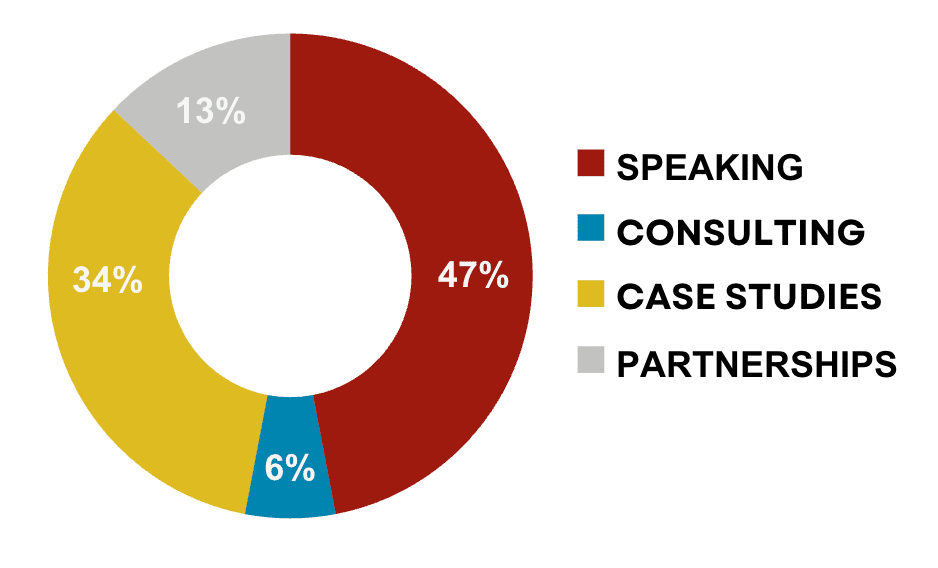
Below is a snapshot of how I spent my time (and earned my revenue) in 2025. It’s a good reflection of where I can help you most—and where many of your fellow readers are already seeing results.
Let’s walk through it.
🎤 Speaking — 47%. Speaking was the biggest part of my work again—both onstage and on Zoom. If you’re planning a partnership summit, team retreat, or conference and want a speaker who brings energy, clear takeaways, and zero R’s, I’m your guy. Every talk is customized, and virtual keynotes are budget-friendly.
If you want your team fired up and focused, bring me in to speak.
Learn more about my speaking here.
✍️ Case Studies — 34%. Partnership case studies are a signature part of my business, and honestly, the easiest “yes” for most partnership teams. They’re pure social proof. They help prospects see your value without you having to oversell. Last year, I worked with Big Brothers Big Sisters, Vow for Girls, Flutie Foundation for Autism, buildOn, and the National Wildlife Federation, to name a few.
Case studies are the sales team sitting on your shoulder during every pitch.
Each case study is $1,500. Reply if you'd like to see a few examples.
🤝 Partnerships — 13%. I also help match nonprofits with the right agencies—or jump in as a tactical consultant when a team needs hands-on support to execute a strategy. If you’re writing an RFP or considering outside support, send it my way. If I can help, I will. If not, I’ll point you to people I trust.
No fluff. Just honest matchmaking for better results.
🧠 Consulting & Coaching — 6%. Consulting and coaching is where I get to work closely with partnership teams—especially small and mid-size nonprofits—helping them sharpen strategy, improve outreach, and close more deals. It’s $300 per hour, flexible, and a low-friction way to start working together.
If you’ve ever wanted regular guidance from someone who’s been in the corporate partnership world for three decades, this is for you.
Here’s my simple goal for 2026:
If just 10% of this community invests in a case study, a coaching hour, or a speaking engagement, we’ll create even more impact together.
Many of you have been loyal readers for years—and I’m very thankful. If we haven’t worked together yet, let’s change that this year. Whether it’s one hour, one campaign, or one project, we’ll both get something valuable out of it.
Win-win is the Selfish Giving way.
Let’s work together in 2026!
✍️ Partnership Notes
In my "Partnership Notes" section, I share stellar corporate partnership programs and show you how to do your job better!
1. Have you considered this unlikely corporate partner?
💡 This roundup shows how the flooring industry quietly supports local causes—schools, housing groups, disaster relief—by embedding philanthropy into trade events, vendor programs, and dealer networks. What stands out isn’t flashy campaigns, but consistency: small contributions, repeated across many businesses, adding up to real impact. For nonprofits, the lesson is to look beyond consumer brands and focus on industry ecosystems that already value community support.
2. Let’s commit to better "checkout charity" programs in 2026.
💡 A new study finds that register asks can backfire by making shoppers feel pressured, anxious, or guilty—rather than generous. The lesson for partnership pros is that context matters. Simply asking isn’t enough; how and when you invite giving shapes both the donor experience and the brand relationship. Thoughtful timing, clear impact, and less social pressure can turn an awkward moment into one that actually builds trust and long-term value.
3. The sales team is changing—partnership teams should pay attention.
💡 While written for software sales, this article has real implications for partnerships. By the end of 2026, traditional sales teams will look very different: fewer reps, more AI, and buyers doing most of their research before any human conversation happens. That shift matters for partnership pros. Companies are increasingly influenced by content, proof points, and peer validation long before they ever take a meeting. If prospects are “deciding” before they talk to you, your partnership page, case studies, and credibility signals matter more than your pitch deck. Your job is to make sure what they see first makes you the obvious choice.
🤑 Marketing Your Cause
In my "Marketing Your Cause" section, I share strategies for growing your brand and audience—two key ingredients for securing more partnerships.
1. Stop chasing thought leadership—build "thinking leadership" instead.
💡 Too many nonprofits feel pressure to crank out “thought leadership” content that sounds impressive but doesn’t actually help anyone. This piece makes a helpful distinction: thought leaders broadcast opinions, while thinking leaders show their work. For nonprofits, that means sharing how you make decisions, what you’re learning in real time, and even where things didn’t go as planned. When you invite supporters into your thinking—not just your conclusions—you build trust, credibility, and loyalty. The takeaway: don’t aim to sound smart—aim to be useful.
2. Storytelling skills are in high demand. 🎁
💡 Companies across industries are doubling down on storytelling—literally hiring people with “storyteller” in the job title to own blogs, podcasts, executive messaging, case studies, and more as brands wrest control of their narratives in a fragmented media world. Employers from tech giants to financial firms see authentic, compelling storytelling as key to audience connection and trust in an era when traditional news and earned media are shrinking. For nonprofits, this trend is a reminder: your ability to tell why your work matters—not just what you do—will become an even stronger asset in fundraising, audience growth, and impact marketing in 2026.
3. How small, unexpected content can create big engagement. 🎁
💡 This article shows how small-town museums are going viral on TikTok and social platforms by pairing their collections with trending audio, humor, and relatable storytelling. For nonprofits, the lesson isn’t that you need a huge budget or flashy campaign—it’s that creative, audience-centric content that meets people where they already are can dramatically expand awareness and connection. Whether you’re a local food bank, service organization, or cultural nonprofit, experimenting with playful, human content on the platforms your audience uses most can democratize your mission and bring new supporters into your orbit.
😎 Cool Jobs in Cause
In my "Cool Jobs in Cause" section, I share open partnership positions so you can discover your next adventure.
1. Corporate Partnerships Manager, Operation Warm, Remote
2. Business Partnerships Manager, Humane World for Animals, Remote
3. Sponsor & Partner Manager, Simon's Heart, Conshohocken, PA
4. Director, National Partnerships, Arthritis Foundation, Remote
5. Corporate Development Manager, Flying Horse Farms, Mount Gilead, OH
🧠🍌 Brain Food
In my "Brain Food" section, I share content that sparks inspiration, fuels curiosity, and brings a smile to your face!
1. Think first, then let AI do the heavy lifting.
💡 This article doubles down on the point I made last month about being “AI Ready.” AI is wicked awesome, but it won’t fix fuzzy thinking. Strategy still comes first. That’s a good reminder for partnership pros who jump straight into writing pitches, crafting decks, or producing reports with AI. If you can’t clearly define the goal, the audience, or the action you want, you’re just speeding up confusion. Slow down long enough to think, then let AI accelerate the execution. It’s still your brain steering the ship.
2. Americans expect companies to lead—not hide—on social issues.
💡 This year's Corporate Social Action Tracker study highlights a growing expectation gap: many Americans now want companies to take clearer, more visible leadership on issues like mental health, equity, and community well-being—not just quietly fund programs behind the scenes. The risk for brands isn’t saying the “wrong” thing; it’s saying nothing at all while employees and customers look for signals of values and responsibility.
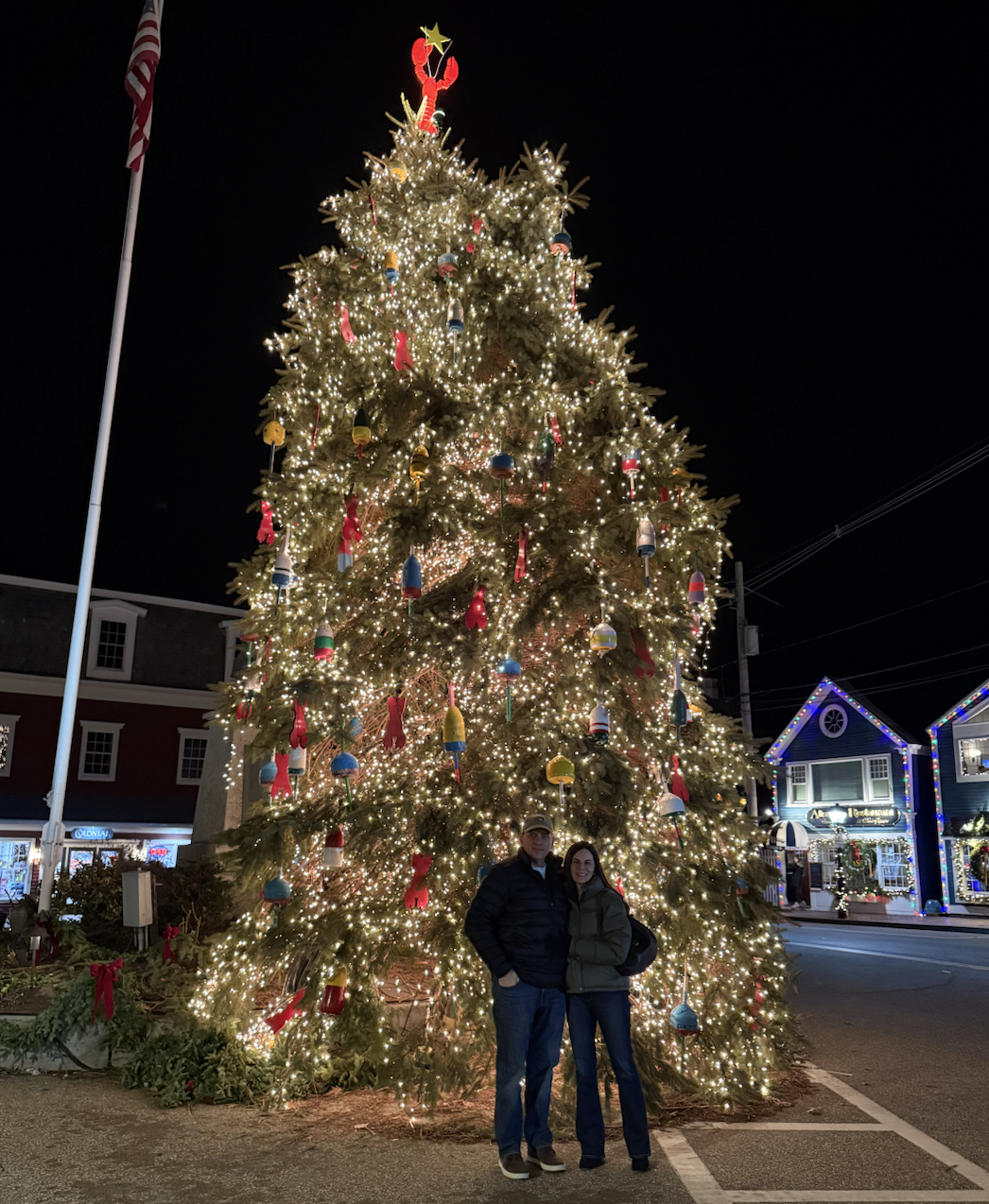
3. We spent a festive few days in Portsmouth, NH, and southern Maine before Christmas.
💡 The Christmas tree in downtown Kennebunkport, Maine, is decorated with wooden buoys and has a big red lobstah as a tree topper!
I'll see you again in the new year!
