
Newsletter: If Your Partner Leaves You on a Mountain, Divorce Them 🏔️ ; Your Next Sponsorship Opportunity Might Already be Live 🎥 ; Your Unfair Advantage is Perspective 🔍
We just got back from a wonderful vacation in Quebec with a good friend and his wife.
He’s lucky I’m still talking to him.
Years ago, he and my twin brother committed one of the great betrayals of my life.
We were hiking in the White Mountains of New Hampshire, headed for a waterfall that my brother had been assuring us for two miles was "just around the bend." At some point, I gave up. And I had a perfectly good reason. I was wearing brand new sneakers, and they were getting trashed.
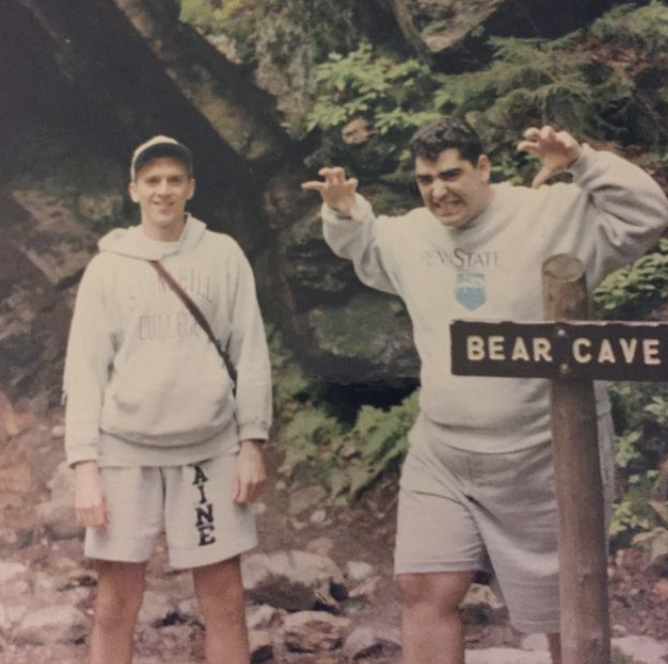
I was lucky I didn't get eaten by a real bear after he left me alone in the woods!
Don’t judge me! I was young and clearly had my priorities out of whack. I now know that replacing a pair of sneakers is a lot cheaper than years of therapy.
“You guys go ahead. I’ll wait here.”
Seemed reasonable to all of us. They hiked to the waterfall. They hiked back to the car.
Except…they never came back for me.
They took a different trail and left me sitting alone in the woods. It was getting dark, and I wasn't sure I knew my way back to the car.
I’m only half kidding when I say it traumatized me. I still don’t like being alone in the woods. Looking back, I sometimes think my passion for gardening is really just my way of enjoying nature while knowing exactly how to get back to the house.
That experience came flooding back when I read a recent New York Times article about something called “Alpine divorce.” [Gift Link] It describes the surprisingly common phenomenon of one partner (usually a man) abandoning the other (usually a woman) while hiking in the mountains. Sometimes it’s because one person is stronger. Sometimes it’s impatience. Sometimes it’s ego.
One psychologist quoted in the article made an observation that stopped me:
“The issue isn’t the mountain, but the mindset.”
Exactly.
And that’s true of partnerships, too.
I’ve seen plenty of nonprofit-business partnerships where one partner decides to sprint ahead while the other struggles to keep up. It's usually the company!
❌ The company wants bigger, better activations, but the nonprofit doesn’t have the resources and staff.
❌ The marketing team wants results yesterday, but the nonprofit is still trying to figure out how to execute last month’s campaign.
Eventually, one partner gets frustrated.
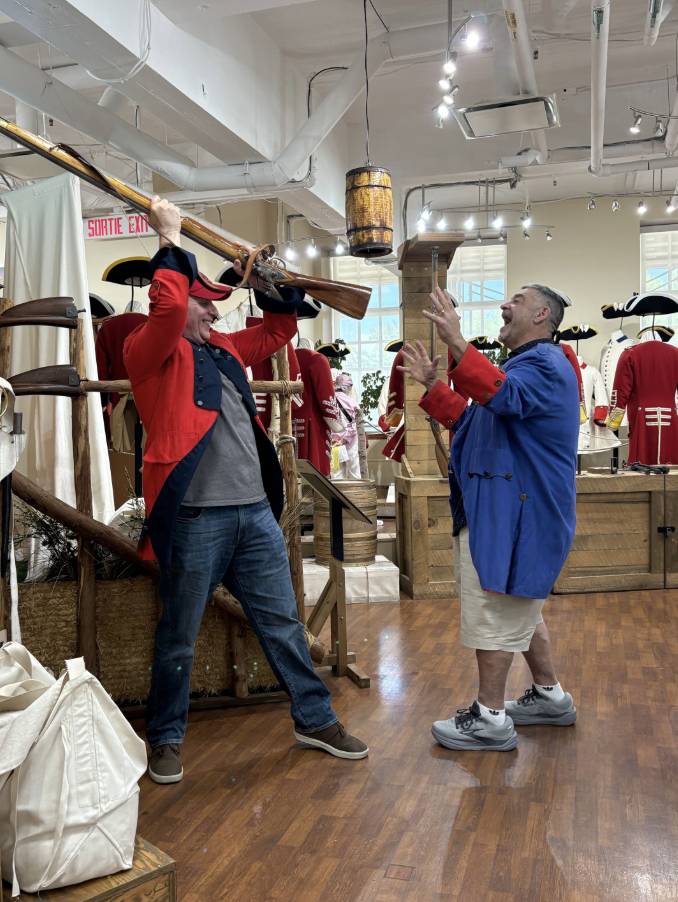
Last month, at the Plains of Abraham Museum in Quebec City, I finally settled a decades old score.
Not because the partnership lacked potential, but because one partner stopped caring whether the other could make the climb.
The best partnerships don’t move at the speed of the strongest partner. They move at the speed that allows both partners to succeed.
That’s what a good partnership looks like. That’s what empathy looks like. And that’s what long-term partnerships require.
The companies I admire most don’t just ask, “How fast can we go?” They ask, “How do we get there together?”
That’s a very different question.
As for my friend, we're still besties after 35 years!
But if he ever leaves me alone in the woods again? Our partnership is over.
✍️ Partnership Notes
Two partnership insights that matter.
🦅 Your next sponsorship opportunity might already be live.
A pair of bald eaglets recently fledged from a nest atop a U.S. Steel facility in Pennsylvania. The nest has been there since 2019, and because of its location, the livestream is known as the U.S. Steel Bald Eagle Cam, attracting thousands of viewers each nesting season. It got me thinking about another wildly popular livestream: Jackie and Shadow, the famous bald eagles at Friends of Big Bear Valley. If a nest at a steel plant can be the U.S. Steel Bald Eagle Cam, why couldn’t a beloved conservation livestream have a corporate sponsor? Jackie and Shadow do need $10 million. Think: Patagonia Bald Eagle Cam. The takeaway: Nonprofits often overlook digital assets that people return to week after week. Sometimes your most valuable sponsorship inventory isn’t an event—it’s an audience that keeps coming back.
☎️ Are You Underpricing Your Sponsorships? [REPLAY]
Larry Weil and I went live last week to tackle a question that doesn’t get nearly enough attention: Are organizations leaving money on the table by how they price sponsorships? In hindsight, I realized something interesting. Dynamic pricing isn’t really the goal. Pricing power is.
That led me to a simple formula I’ve been thinking about ever since:
Pricing Power = Value × Demand × Scarcity × Proof
Think about it:
Value: How important is your audience to this specific sponsor?
Demand: How many companies want the opportunity?
Scarcity: Is the sponsorship exclusive or one of many?
Proof: Can you demonstrate that partnerships with your organization deliver results?
The more those four factors increase, the more pricing power you have. What do you think?
🤑 Marketing Your Cause
One move you should steal.
📬 Your unfair advantage isn’t information anymore. It’s perspective.
An Inbox Collective article explores how newsletters can thrive as AI-powered inboxes increasingly summarize and filter content for readers. The implication is bigger than email: if everyone has access to the same information, simply curating links or reporting the news won’t be enough. The takeaway for nonprofit marketers: invest in the things AI can’t easily replicate—your expertise, your point of view, and the community you build around it. That’s exactly what I’m trying to do with this newsletter. I'm not just sharing the news, but helping you think differently about what it means for your organization.
😎 Cool Jobs in Cause
Find your next adventure.
🤝 Dir. of Strategic Partnerships, Jared's Keepers Foundation, Nashville, TN
🤝 Dir. Corporate Engagement, Lupus Foundation of America, Washington, DC
🤝 Associate Director, Corporate Sponsorships, The ALS Association, Remote
🤝 Manager of Corporate Engagement, Project Bread, Boston, MA
🤝 Vice President, Corporate Partnerships, American Forests, Remote
🧠🍌 Brain Food
One thing that is feeding my thinking.
❤️ The best communities don’t just inform people. They connect them.
An Atlantic article explores an unexpected trend: people are finding romantic partners through Substack newsletters. While the story is about dating, the bigger lesson is about community. The most valuable organizations don’t simply deliver information—they create opportunities for meaningful connections between people with shared interests. Whether you’re building a newsletter, nonprofit, or membership organization, that’s worth remembering. Your greatest value may not be the content you create, but the relationships you help make possible.
