
Newsletter: Let’s Stop Ambushing Shoppers at Checkout 🥷 ; In Corporate Giving, Will Winner Take All? 🏆 The End of Consideration is Near 🎬
I’ve loved point-of-sale fundraising for a long time, and here’s one reason why: It democratizes giving.
You don’t need to be a millionaire or have your name on a building. You can be buying groceries, round up your purchase by 73 cents, and join thousands of other customers doing the same thing.
A little bit from a lot of people can add up to a lot of money. I just ❤️ that.
But a new study highlighted by The Wall Street Journal raises an important warning about these campaigns. [GIFT LINK]
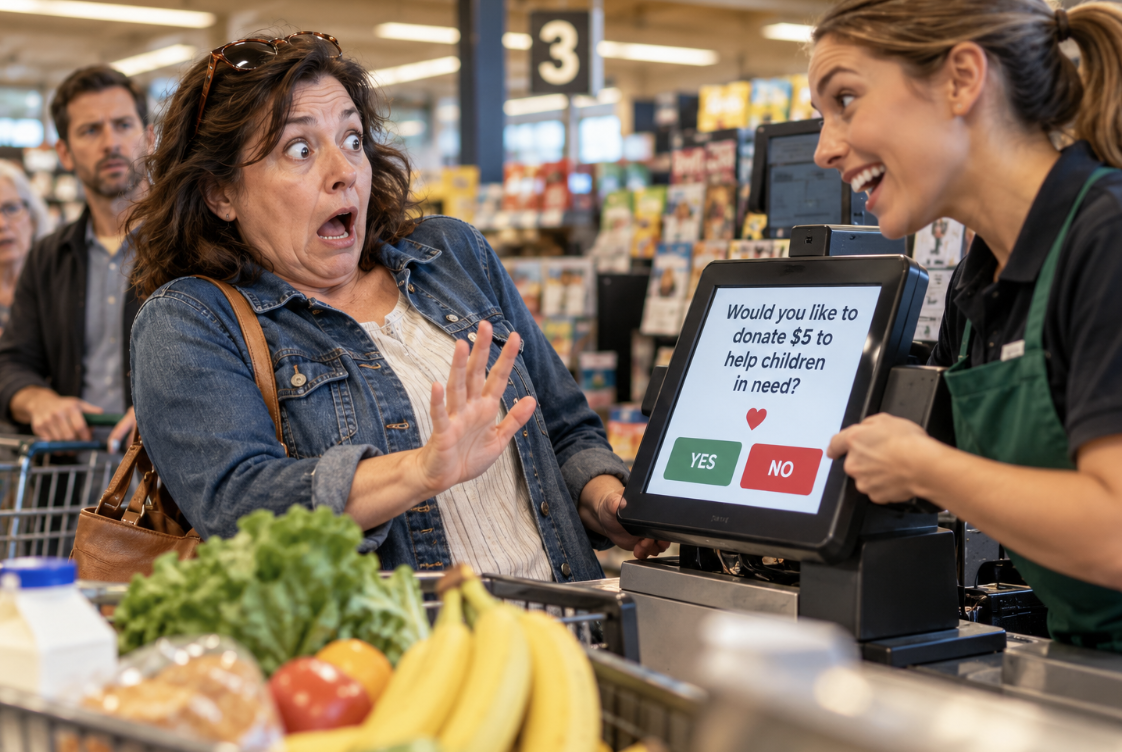
Researchers asked 329 people to imagine themselves checking out at a grocery store when the cashier asks them to donate to UNICEF.
The customers who felt more time pressure from the request had a significantly worse impression of the retailer. They were also less likely to say they’d shop there again and more skeptical about the retailer’s motives.
Does that mean businesses should stop asking customers to donate?
Umm...no.
But maybe we need to do a better job preparing people for the ask at the register.
Think about the typical checkout experience. You’re trying to pay. There’s someone waiting behind you. Suddenly you’re asked whether you’d like to give a buck or two to an organization you’ve never heard of.
Uhhh…no? Wait. Does that make me a bad person? Can I just have my groceries? 😂
The researchers suggest a better approach: Tell customers about the cause before they reach the register.
It reminded me that the best POS campaigns have a “special event” feel to them. They use signage, pins, and PA announcements to let shoppers know something special is happening. Really smart businesses might even line their shelves with products that support the cause—a great lead-in to an ask.
I’m sure you’ll see plenty of this during Pinktober! 🎀
Use signs and displays throughout the store. Tell people who the nonprofit is and why the business supports it. Explain what their donation will accomplish.
And here’s something I’d add: Show them proof.
Don’t just say, Help us fight hunger.
Tell them that last year customers donated 300,000 meals. Show them the people and communities the partnership helped.
Now when customers finally get the ask, they’re not encountering the partnership for the first time. They already understand it—and maybe they’ve already decided to participate.
That’s good fundraising and good partnership activation.
Point-of-sale fundraising works because thousands of ordinary people can accomplish something extraordinary together.
Let’s not screw that up with a bad ask.
The checkout should close the story—not begin with a jump scare. 👻
✍️ Partnership Notes
A partnership insight that matters.
🏆 Corporate giving may be becoming a winner-take-more game.
Corporate giving isn’t disappearing—but it may be concentrating. The Chronicle of Philanthropy reports that some companies are making fewer gifts while giving more to the nonprofits they choose to support. The organizations succeeding aren’t just asking for money. They’re finding ways to add more value for their partners. For example, Heroes on the Water creates employee volunteer experiences that can turn employees into internal champions. MIB Agents gives pharmaceutical companies access to patients and families whose insights can actually improve clinical research.
🔒 A paywall may stop you from reading this article. Just reply to this email, and I'll send you a copy.
Joe’s Take: This is another reason nonprofits need to get better at partnerships. If companies are concentrating their giving among fewer organizations, being on the prospect list isn’t enough. You want to become difficult to cut. That means understanding what the company is trying to accomplish, delivering value beyond the donation, and proving that value afterward. The question isn’t just, How do we get this company? It’s also, Why should this company keep us?
🤑 Marketing Your Cause
One move you should steal.
🤖 What if people stop considering you?
Marketing extraordinaire Mark Schaefer spent years trying different products to remove mildew from his boat. Then he showed the problem to AI. It recommended a $34 cleaner he’d never heard of. He bought it without comparing alternatives—and it worked! That’s when Mark realized he’d done something marketers should be paying attention to: he outsourced consideration to AI. Instead of searching Google, visiting websites, reading reviews, and comparing products, he asked AI and accepted its answer. As more people do this, Schaefer argues, the traditional “consideration” stage of the marketing funnel could shrink dramatically.
Joe’s Take: Think about what this could mean for nonprofits. Someone looking for a cause to support may no longer Google “best nonprofits fighting hunger” and visit five websites. They may simply ask AI, “What’s the best nonprofit fighting hunger?” Suddenly, you’re not competing to be one of ten blue links. You’re competing to be one of the few organizations AI recommends. That makes something we’ve talked about before even more important: you need to be known for something. Your website, outside coverage, expertise, reviews, impact stories, and other proof all help machines understand who you are and why you matter. In an AI world, being easy to find may matter less than being easy to recommend.
😎 Cool Jobs in Cause
Find your next adventure.
🤝 Senior Vice President, Corporate Partnerships, Arthritis Foundation, Atlanta
🤝 Senior Manager, Business Development, ASPCA, Remote
🤝 Events & Corporate Partnerships Manager, Lazarus House Ministries, Lawrence, MA
🧠🍌 Brain Food
One thing that is feeding my thinking.
🧵 What can a 960-year-old tapestry teach us about fundraising?
Two weeks ago in Brain Food, I wrote about the Bayeux Tapestry and the £5 million gift helping bring it to the British Museum. Well, apparently the Bayeux Tapestry hasn't finished teaching us about fundraising! Fundraiser Mark Phillips recently visited the tapestry and realized he was essentially looking at an ancient fundraising campaign and its impact report. William the Conqueror needed ships, horses, weapons, food, and men to invade England. He made his case, secured an influential lead supporter, asked wealthy supporters for contributions based on their capacity, and then the tapestry showed what all that support had accomplished. Nearly 1,000 years later, Phillips argues, we’re still rediscovering many of the same fundraising principles.
Joe’s Take: We spend a lot of time talking about what’s changing—AI, social media, search, fundraising technology. But maybe we should spend a little more time thinking about what isn’t changing. People still want to understand why something matters. They want to know how they can help. They want their contribution to matter. And afterward, they want to know: Did it work? Did I matter? What happened because I helped? The tools will keep changing. The humans using them—not so much.
