
Newsletter: Rome’s Colosseum Doesn’t Need a Logo 🏟️ ; Maybe You Don’t Need a Newsletter 🫢 ; Who Decides Which Companies Make the Cut? ✂️
Greetings from Italy! 🇮🇹
Rome is now a couple of days in my rearview mirror as we've moved on to Positano (who knew this place had so many fricken stairs! 😂), but I’m still thinking about something I saw during my second visit to the Colosseum.
Or, more accurately, something I DIDN'T SEE: a giant shoe. 👞
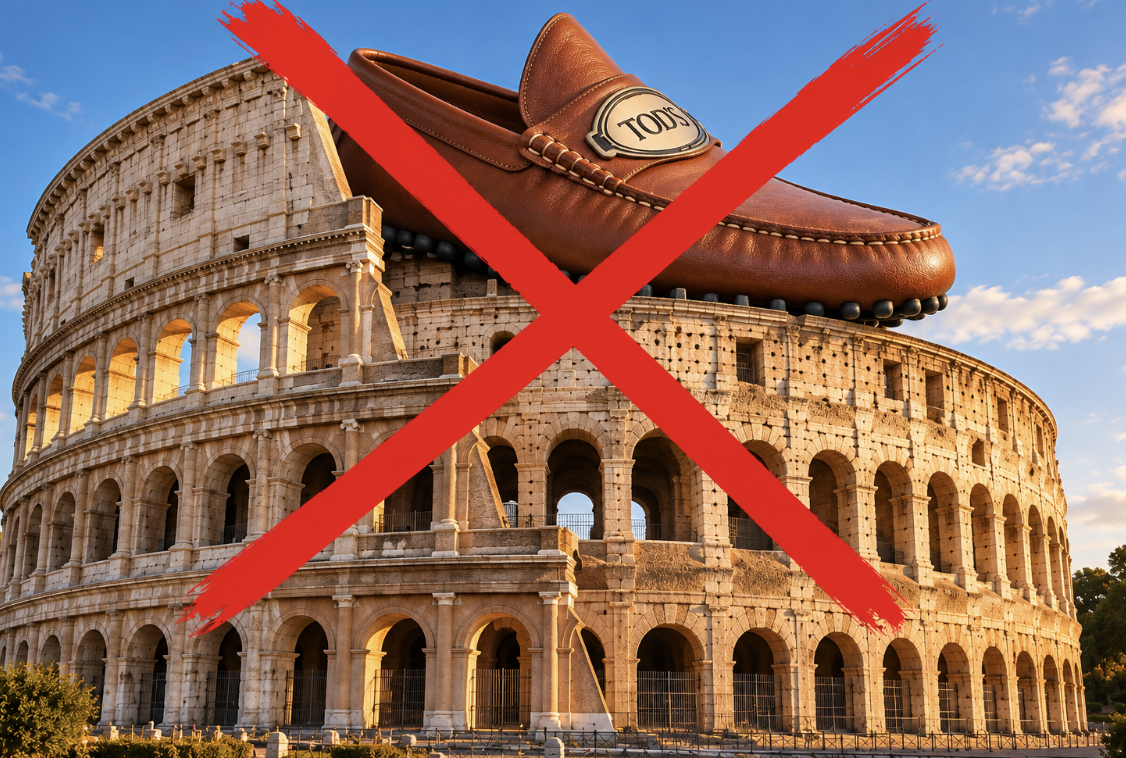
Four years ago, I visited the Colosseum and learned that Tod’s, the Italian luxury brand, had committed €25 million to help restore one of the world’s most famous landmarks.
Our guide told us that when the partnership was announced, Romans worried Tod’s would slap a giant shoe on the Colosseum's side. Of course, that didn’t happen.
Instead, Tod’s did something every partnership pro should pay attention to: it made the story the activation.
Tod’s created great content around the restoration and generated years of media coverage connecting the company with Italian culture, craftsmanship, and preserving one of the country’s greatest treasures.
No giant shoe required.
When I first wrote about this partnership four years ago, the big takeaway was earned media.
I still do.
Partnership pros sometimes confuse visibility with logos. We promise companies banners, signs, booths, and their logo plastered on anything that doesn’t move.
But what if branding isn’t appropriate, or even the best opportunity?
Imagine a company helping restore Mount Rushmore. You probably don’t want to carve its logo next to Teddy Roosevelt. 😂
That doesn’t mean you have less value to offer.
Maybe you don’t have a million eyeballs to offer a company. But you might have a story worth a million eyeballs.
Build that into the partnership. Create great photos and video. Document the work. Identify milestones worth announcing. Give executives something meaningful to talk about. Pitch the story to the media.
Because something interesting happens next. Earned media becomes reputation.
Tod’s doesn’t have to say it cares about preserving Italian culture. It can point to the fricken Colosseum.
And reputation creates something else: PROOF.
Tod’s showed other companies that they could support one of the world’s great cultural treasures without turning it into a billboard.
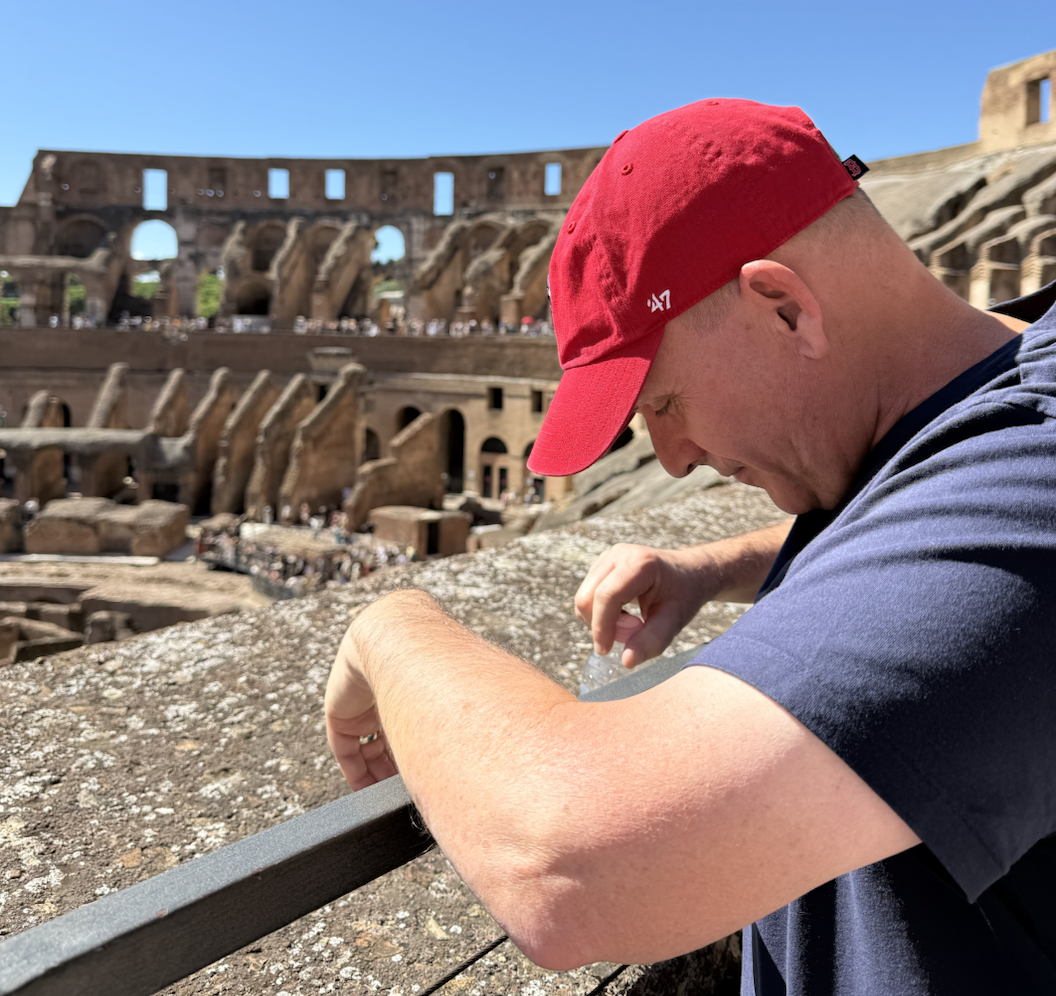
Bowing my head to remember all the Colosseum sponsors who lost their naming rights in the arena.
Bowing my head to remember all the Colosseum sponsors who lost their naming rights in the arena.
Four years ago, I wrote that partnerships beget partnerships.
Well, this one may have.
In 2025, Mapei, the Italian building-materials company, became a technical sponsor of work on the Colosseum’s southern ambulatories. Its laboratories even developed special lime-based materials for the ancient structure. This past March, the restored area officially opened to the public.
Did Tod’s directly inspire Mapei? I don’t know. But Tod’s certainly helped demonstrate how to support one of the world’s great cultural treasures without turning it into a billboard.
In short, Tod's gave other companies a model they could follow. That’s partnership proof in action.
A successful partnership doesn’t just create value for today’s partner. It makes the next partnership easier to imagine—and easier to sell.
Four years later, there’s still no giant Tod’s shoe hanging from the Colosseum.
There doesn’t need to be.
Sometimes the most powerful sponsorship isn’t the one everyone can see.
It’s the one everyone talks about.💥
✍️ Partnership Notes
A partnership insight that matters.
😇 Don’t just find partners. Build something companies can join.
The Dollywood Foundation just launched the first Give Like Dolly Day, supporting Dolly Parton’s Imagination Library—and seven brands found seven different ways to participate. American Eagle renamed a pair of flare jeans the “Dolly Jean” and donated the proceeds, along with a Dolly T-shirt. Kroger asked shoppers to round up and matched their donations. Jeni’s donated 25% of afternoon sales, while the Musicians Hall of Fame donated $9.25 from every admission—a nod to the September 25 date.
Joe’s Take: The Dollywood Foundation didn’t hand every company the same sponsorship package. It created a platform companies could make their own. There’s a memorable name, a date, a clear cause, and enough flexibility for partners to participate in ways that fit their businesses and customers. Think about your own organization. Could you create an annual day, campaign, challenge, or tradition that gives companies multiple ways to join? Sometimes the best way to find more partners is to build a bigger table.
🤑 Marketing Your Cause
One move you should steal.
📬 Maybe you don’t need a newsletter.
I never thought I would write these words! You know I love a good newsletter, but maybe not every organization needs one. Bread for the World had been sending a traditional monthly newsletter packed with advocacy, cultivation, and organizational updates. But it wasn’t producing much action. So the organization replaced it with focused quarterly campaigns, each built around a specific goal and call to action. Supporters then received follow-up emails based on how they responded. The result? Actions and donations increased 63% over the previous year.
Joe’s Take: Now, don’t stop sending your newsletter after reading this. I'm certainly continuing with mine! The lesson is simpler: Don’t keep sending something just because that’s what you’ve always sent. Start with what you want your audience to do, then choose the format that gives you the best chance of getting them there. Maybe that’s a newsletter. Maybe it’s a focused campaign, a single great story, or a series of targeted emails. Your newsletter isn’t the strategy. It’s just one tool for executing it.
😎 Cool Jobs in Cause
Find your next adventure.
🤝 Director of Corporate Partnerships, Brain Injury Association, Remote
🤝 Director of Corporate Partnerships, Feeding America, Chicago
🧠🍌 Brain Food
One thing that is feeding my thinking.
✂️ Who decides which charities make the cut?
Millions of employees donate through workplace-giving programs, often with their employers matching their gifts. But a Washington Post guest opinion raises an interesting question about what happens behind the scenes. The author argues that some companies using Benevity exclude certain nonprofits based partly on information from the Southern Poverty Law Center. Benevity says using SPLC data is optional and that individual companies control their own eligibility rules.
Joe’s Take: I’m less interested in debating which organizations belong on which list than in who gets to make the list in the first place. If an employee wants to give their own money to a legal nonprofit, should their employer decide whether that organization is worthy of a matching gift? Maybe. After all, it’s the company’s money too. But if companies are going to draw those lines, shouldn’t employees know where the lines are—and who helped draw them? Who should set the standards for workplace giving?
