
Next week, I'm heading back to Georgetown University to speak to nonprofit leaders in the New Strategies program.
And that got me thinking about Justin McInnis, President & CEO of Texas Search and Rescue (TEXSAR). I met Justin at Georgetown earlier this year.
TEXSAR has one of the more interesting corporate partnerships I've come across.
And here's the funny part. It's with a dumpster company. Yep. Dumpsters. 🚛
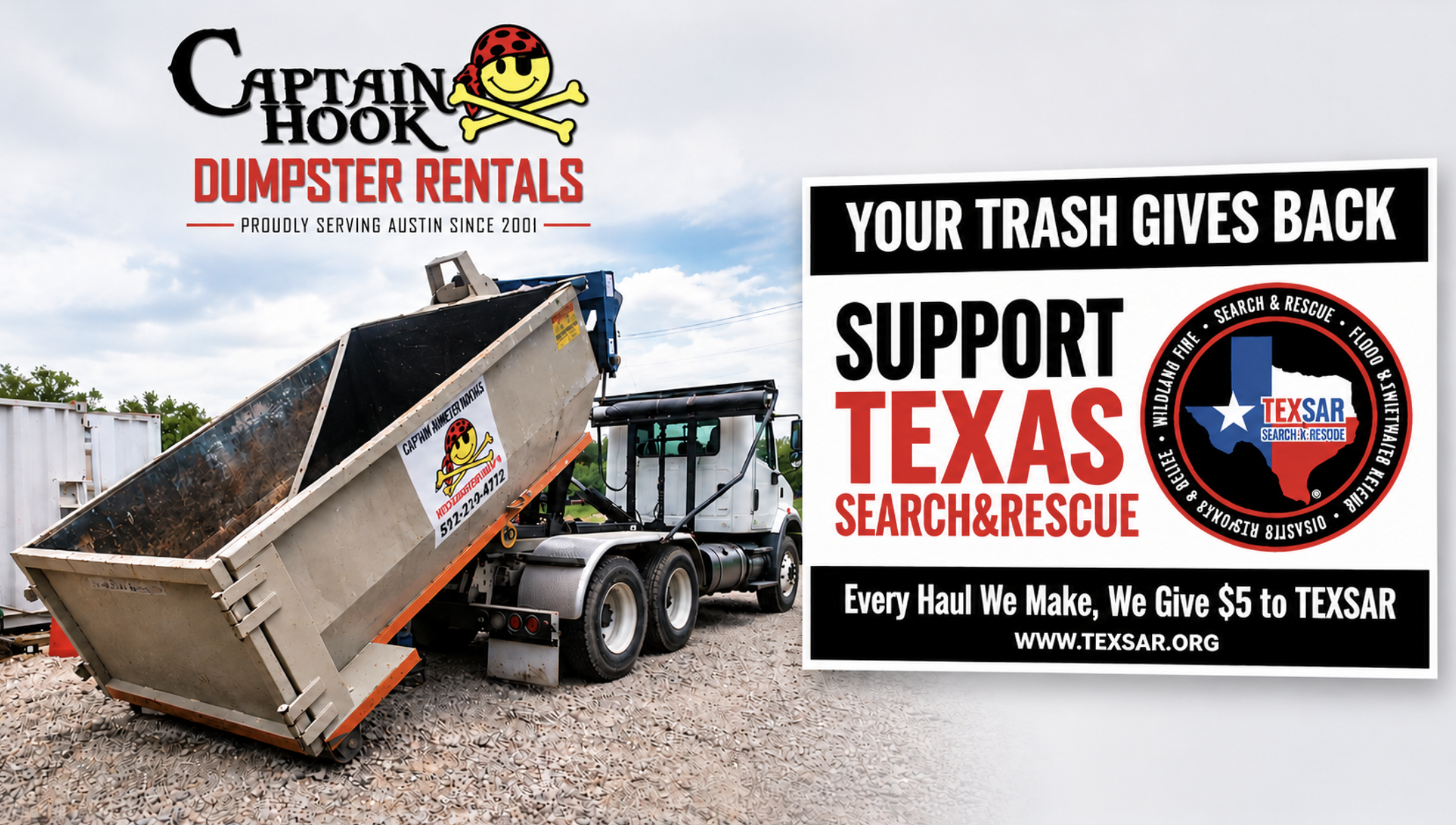
In 2020, Captain Hook Austin, a Texas dumpster rental company, teamed up with TEXSAR, a nonprofit that provides volunteer search-and-rescue services during emergencies and disasters.
The program couldn't be simpler.
Every time Captain Hook hauled a dumpster to the dump, it donated $5 to TEXSAR.
With more than 120 dumpsters in its fleet, those five-dollar donations added up. Within months, Captain Hook had contributed more than $3,000.
The company also invited TEXSAR to put branded decals on its dumpsters, potentially turning them into rolling advertisements for the nonprofit.
And this wasn't just a one-time promotion. After six years, Captain Hook has raised tens of thousands of dollars for TEXSAR.
But here's what really caught my attention.
When this partnership began in 2020, TEXSAR had just $233,000 in annual revenue.
That's right. A nonprofit with less than a quarter-million dollars in revenue was running a cause marketing promotion with a local business.
I especially love three things about this partnership.
First, any business can do cause marketing. You don't need to sell sneakers, coffee, or cosmetics. Heck, you can rent dumpsters! The trick is finding a simple way to connect giving to what your business already does.
Second, small nonprofits can do cause marketing, too. TEXSAR didn't need a national brand, a massive marketing department, or a complicated sponsorship package. It needed a willing business partner and a simple idea.
Third, it's a win-win partnership. When hurricanes and floods strike, TEXSAR helps communities respond and recover. And when the waters recede and the cleanup begins, what do people need? Yep, dumpsters!
TEXSAR gets funding and exposure. Captain Hook supports the community while building goodwill around a service people need after disasters.
One helps communities survive disasters. The other helps them clean up afterward. That's a natural connection, and a great foundation for a partnership!
And that's something worth remembering when you're prospecting for corporate partners.
Too many nonprofits assume that partnerships, and particularly cause marketing, are something reserved for organizations with big budgets and household names. So they overlook the businesses right in their own backyard because they don't fit the traditional image of a corporate sponsor.
But a local dumpster company might be just as enthusiastic about supporting your mission as a national retailer.
Maybe more so!
So don't limit your search to glamorous brands or household names.
And don't assume you need a complicated campaign to get started.
Because great partnerships aren't always about thinking big. Sometimes they're about finding the right partner and starting small.
Even if that partner is hauling trash. 😂
Think your nonprofit is too small to land a corporate partner? Think again! I help nonprofits identify promising companies, develop a compelling pitch, and win their next corporate partnership. If you could use some help, just reply to this email. Let's talk!
✍️ Partnership Notes
A partnership insight that matters.
🥧 MoonPies, Flying Turkeys, and the Power of Nostalgia.
For Halloween, I wrote about how nonprofits can use nostalgia to build stronger corporate partnerships. This week I found two terrific examples! First, MoonPie has launched a limited-edition “Lasso the Moon” box celebrating Jimmy, a new biopic about Jimmy Stewart. MoonPies appear alongside Jimmy in the holiday classic It's a Wonderful Life, and a portion of sales benefits the USO. It's a fitting connection for a company with a long history of supporting service members.
Meanwhile, in Hamilton, Ohio, radio stations are bringing back the infamous turkey drop from the TV show WKRP in Cincinnati. You have to watch the original clip! The November 25 event invites people to donate $10 for a numbered turkey entry, with cash prizes for entries landing closest to the targets. Proceeds benefit Open Door Food Pantry, and local businesses are sponsoring the fun. As God is my witness, I never thought flying turkeys would become a fundraising strategy!
Joe's Take: These two campaigns take different approaches, but they share a powerful ingredient: nostalgia. MoonPie draws on its own history, while the WKRP event taps into a television moment people have been laughing about for nearly 50 years. Both give supporters something familiar to connect with—and a new reason to participate.
Here's the lesson for partnership pros: When researching corporate prospects, don't just look at what companies sell or which causes they support. Explore their history, traditions, and cultural connections. And don't overlook nostalgic events that local businesses might love to sponsor. Sometimes the best new partnership idea is hiding in an old memory. Nostalgia gets people's attention. A great partnership gives them something to do with it.
🤑 Marketing Your Cause
One move you should steal.
🐦 Bird Lovers Want Proof. Everyone Else Wants Emotion.
Want people to take action for your cause? You might need to change your message depending on who's listening. Researchers at Cornell surveyed nearly 5,000 people in the U.S. and Canada to learn what would motivate them to make their windows safer for birds. Their finding? Bird enthusiasts responded best to evidence that window treatments actually work. The general public was more persuaded by emotional appeals about birds being injured or killed. Same cause. Same desired action. Different messages. The study, published in 2025, offers a useful lesson for nonprofit marketers.
Joe's Take: Nonprofits often assume their most passionate supporters need more emotional appeals. But people who already care about your cause may be asking a different question: Will my contribution actually make a difference? That's where evidence becomes especially powerful. Try this with your next campaign: Create two versions of your appeal. One leads with the human—or animal—story. The other leads with proof that your approach works. Test them with different audience segments and see what happens. Don't assume you know which message will win. The best message isn't necessarily the one that moves you. It's the one that moves your audience.
😎 Cool Jobs in Cause
Find your next adventure.
🤝 Manager, Corporate & Civil Society Partnerships, UNICEF USA, Remote
🤝 Nat'l Senior Director, Partner Relations, American Diabetes Assoc., Remote
🤝 Corporate Partnerships Manager, Stern Grove Festival Assoc., San Francisco
🧠🍌 Brain Food
One thing that is feeding my thinking.
🇺🇸 Veterans Charities Get Attention. But Not Much Giving.
With Veterans Day today, here's a statistic that really surprised me: Organizations serving veterans and military families receive less than 1% of all charitable giving in the United States. According to new research from Indiana University's Lilly Family School of Philanthropy, these nonprofits received approximately $4 billion in donations in 2024—just 0.68% of total giving. And while contributions increased 5.9% that year, the ten largest organizations accounted for 85% of that growth. That's quite a contrast with the visibility of veterans causes in television advertising, professional sports, and corporate sponsorships.
Joe's Take: We see veterans causes everywhere, especially around Veterans Day. And that visibility is important. But here's the uncomfortable question: Are we confusing public recognition with meaningful financial support? The research suggests that even highly visible causes can struggle to attract a significant share of charitable dollars—and smaller organizations may have an especially difficult time competing for attention. Of course, the study doesn't capture every dollar supporting veterans, but the overall picture is worth considering. For corporate partnership professionals, there's a lesson here, too: Don't assume a cause is well funded just because it's well known. Sometimes the greatest opportunities are hiding behind the most familiar names.
