
Patriots' Day is always a big deal in Boston, but this year was extra special. My daughter, Cate, ran the Boston Marathon on Monday.
Since she was a kid cheering on the runners every year (she grew up a mile from the bottom of Heartbreak Hill in Newton, Mass.), Cate has had a goal: to run the Boston Marathon in 2026—26 miles on her 26th birthday (yep, April 20th, the same day as this year's Marathon).
26-26-26!
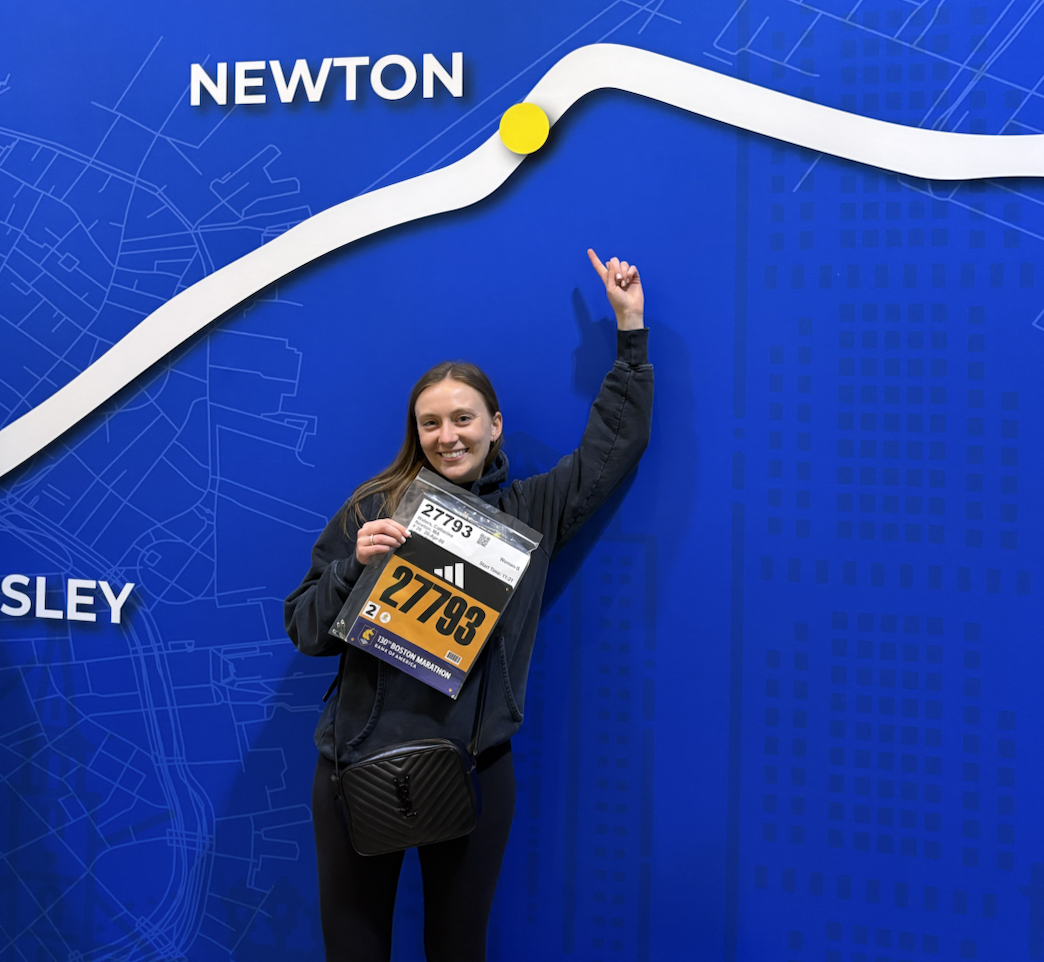
And this year she did it!
Like her dad and mom (I ran in 2005; Deb in 2007), Cate is running for Boston Medical Center—the last place I worked before starting my consultancy—to help ensure that everyone in Boston has access to quality healthcare.
She’s already smashed her goal and raised over $12,000. (For context, the Boston Globe reported yesterday that the top marathon fundraiser pulled in more than $466,000 for St. Jude's Children's Research Hospital.)
And a corporate partnership played a role in fundraising during the last week.
Ocean State Job Lot (OSJL), a longtime BMC supporter and a relationship I helped develop into a cause marketing partnership, provided BMC with $25,000 in challenge dollars as the team headed into the final week before the Marathon. For example, if a runner raised $1,000, OSJL will contribute $250 to her fundraising effort.
That kind of incentive doesn’t just add dollars—it creates urgency, momentum, and excitement at exactly the right moment.
Too often, we think of partnerships as something that happens before a campaign launches.
But the best partnerships show up when it matters most.
✅ They accelerate results.
✅ They energize participants.
✅ They give people a reason to act now.
That’s what this one did.
The right partnership, at the right moment, doesn’t just support your campaign. It can change the outcome!
Congrats to Cate and all the runners! 🙌
✍️ Partnership Notes
One partnership insight that matters.
🏃♀️ The Boston Marathon is the most powerful partnership model in the country.
Every year, the race brings together corporate sponsors, nonprofits, and thousands of participants into a single, coordinated system. Through its official charity program, nearly 200 nonprofits receive race entries and recruit runners who commit to fundraising, helping generate tens of millions of dollars annually. What makes it so effective isn’t just the scale—it’s the structure. Sponsors provide the platform, nonprofits bring the mission, and participants activate both through their own networks. The key takeaway is if you want to scale a partnership, don’t just build a campaign—build a role for participants. Give people something to do, not just something to donate, and they’ll bring their own networks, energy, and credibility.
🤑 Marketing Your Cause
One move you should steal.
🏆 Don’t just win awards—use them.
With the Halo Awards coming up at the Engage for Good Conference this week, it’s a good reminder that awards aren’t just recognition—they’re marketing assets. Too many organizations treat awards as a moment instead of a tool. The takeaway for partnership teams: awards are proof. They validate your work, signal credibility, and give partners something to point to internally. That’s why leveraging awards is a key part of the Partnership Proof Flywheel—not just celebrating wins, but using them to attract the next opportunity. If you’re up for an award, don’t just announce it. Build it into your story.
😎 Cool Jobs in Cause
Find your next adventure.
🤝 Manager, Signature Events & Partnerships, Cancer Support Community, Washington, D.C.
🧠🍌 Brain Food
One thing that is feeding my thinking.
📊 Trust is good, but proof is better. 🔐 (I can email you this article)
In a letter to the Chronicle of Philanthropy, my friend and newsletter subscriber Dan Goldenberg, President of the Call of Duty Endowment, pushes back on the idea that trust-based philanthropy can replace accountability. His argument is simple: without clear measures of success, it’s hard to know what’s actually working. It’s part of a broader debate in the sector, but the takeaway is straightforward: trust and proof go hand in hand. As Dan puts it, “trust, but verify.” The lesson for nonprofit leaders: strong relationships matter, but results matter more. In a world of limited resources and urgent needs, the organizations that stand out aren’t just trusted—they’re the ones that can prove it.
